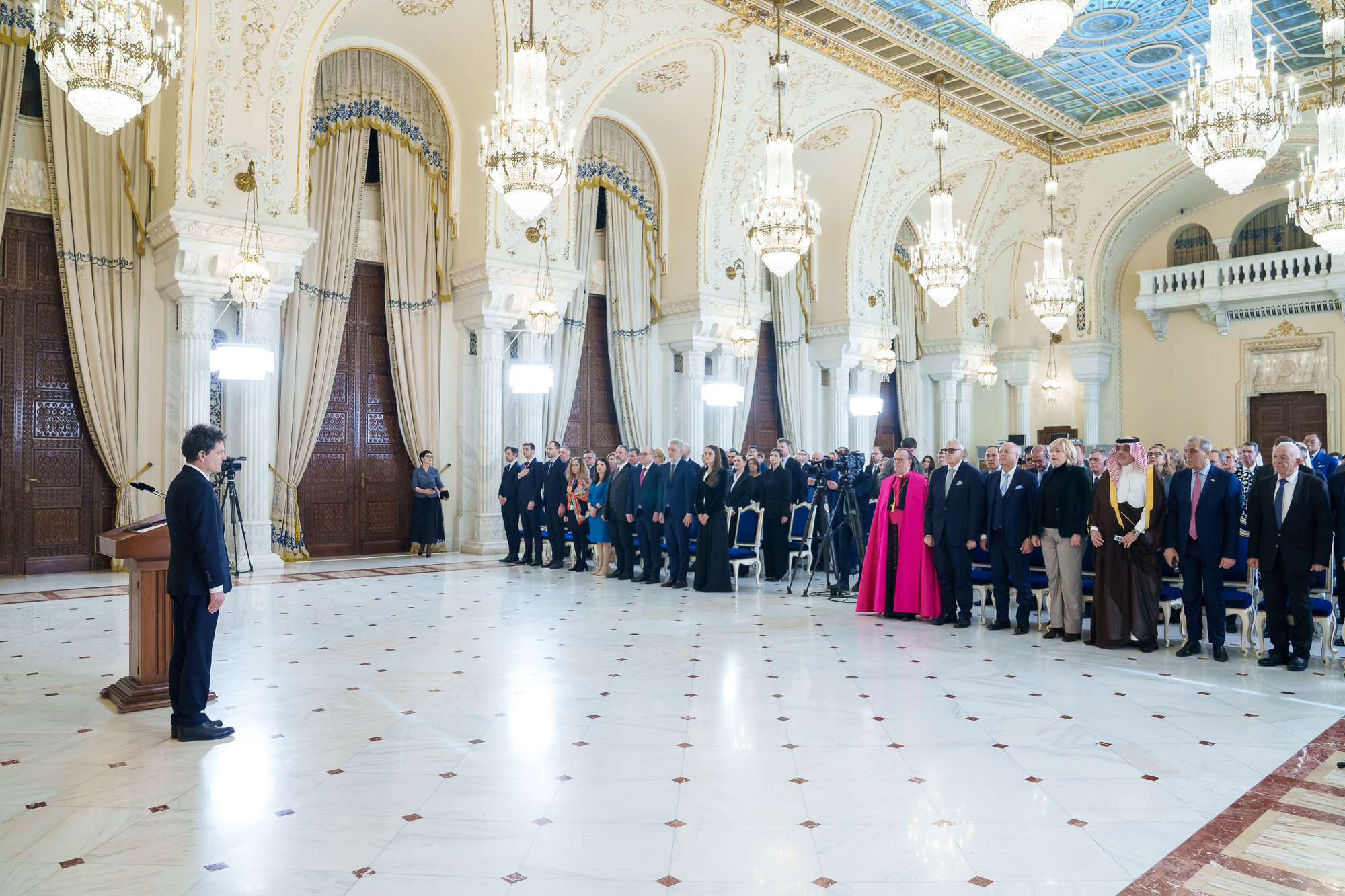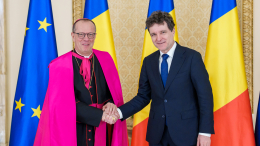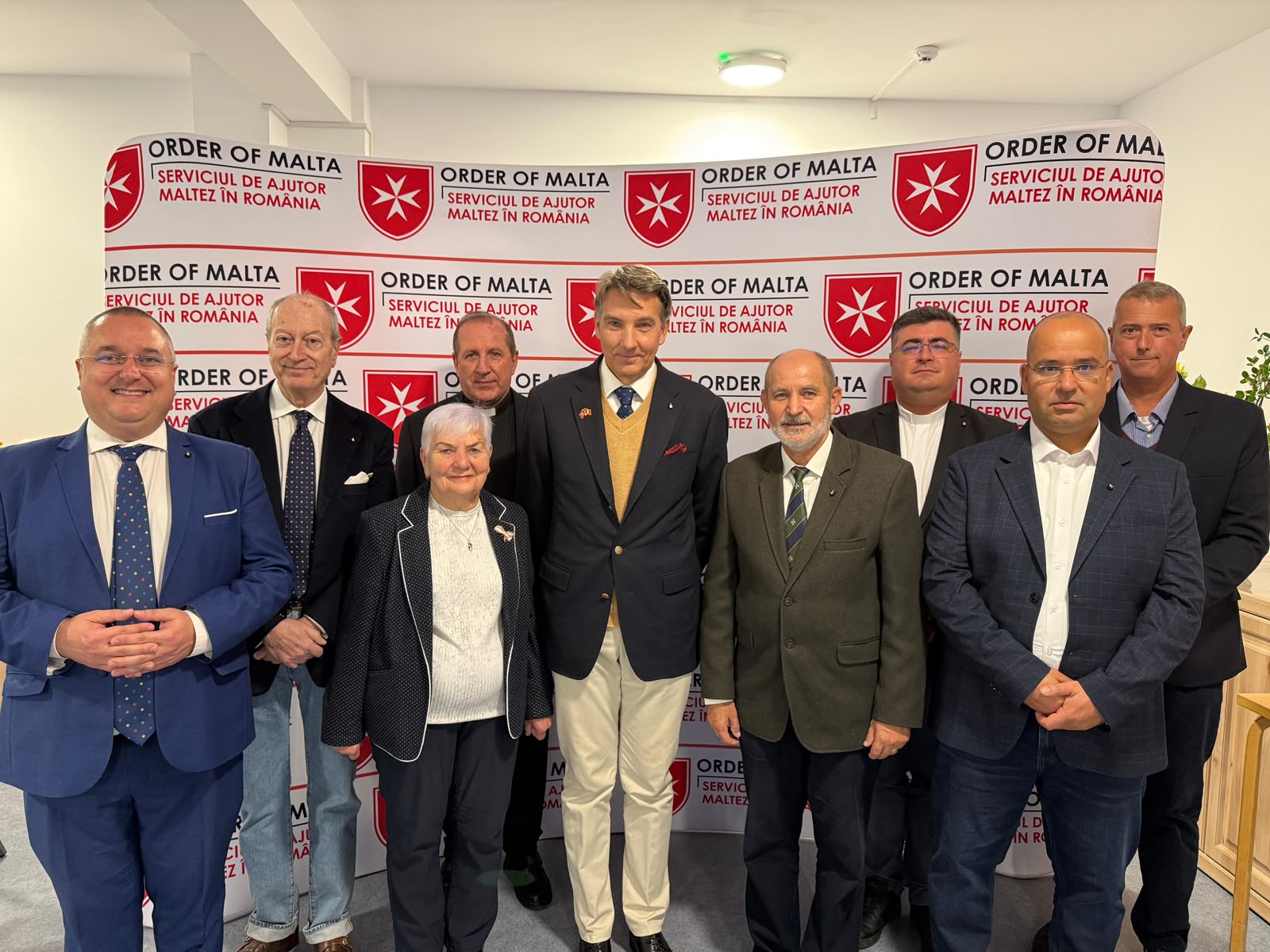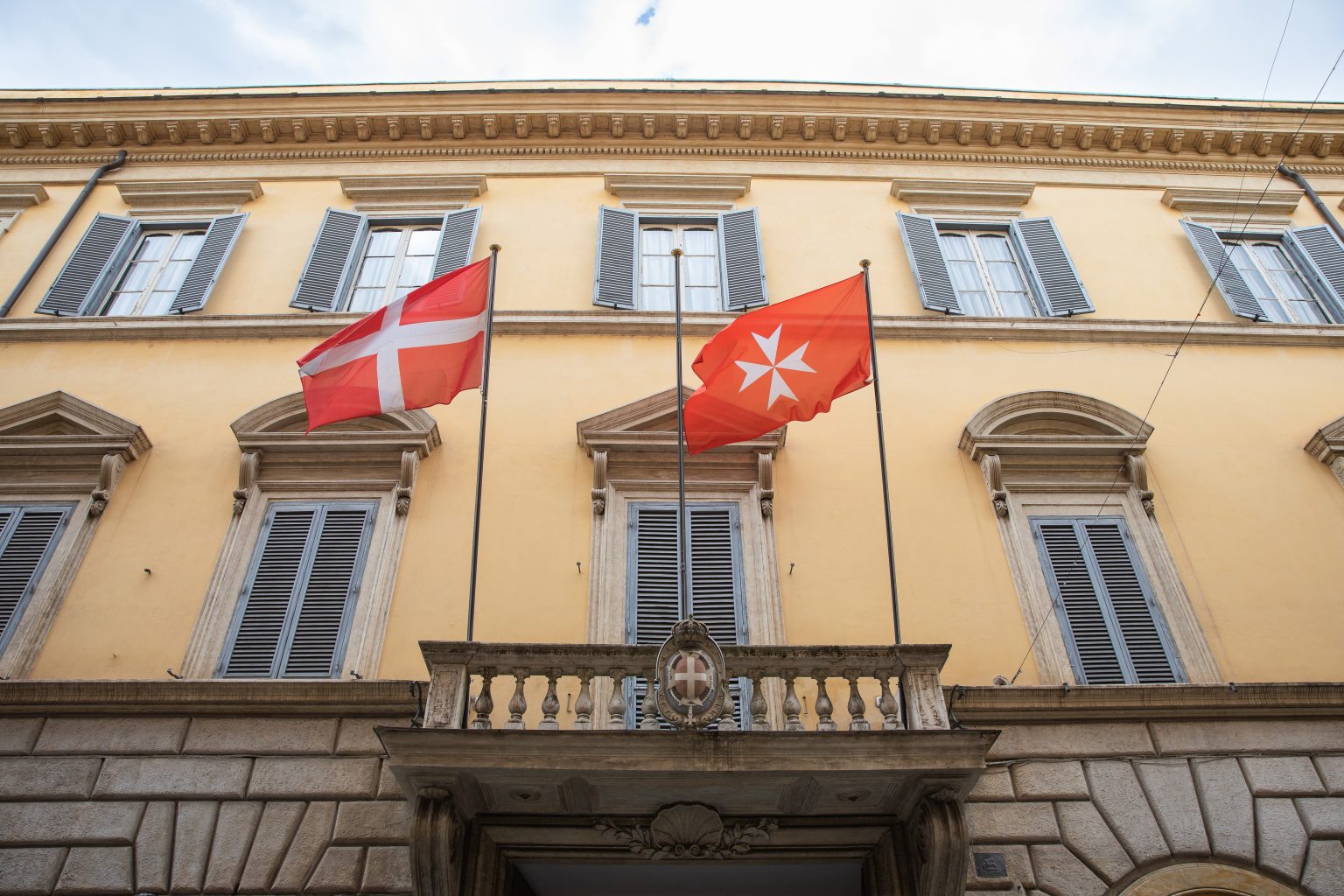
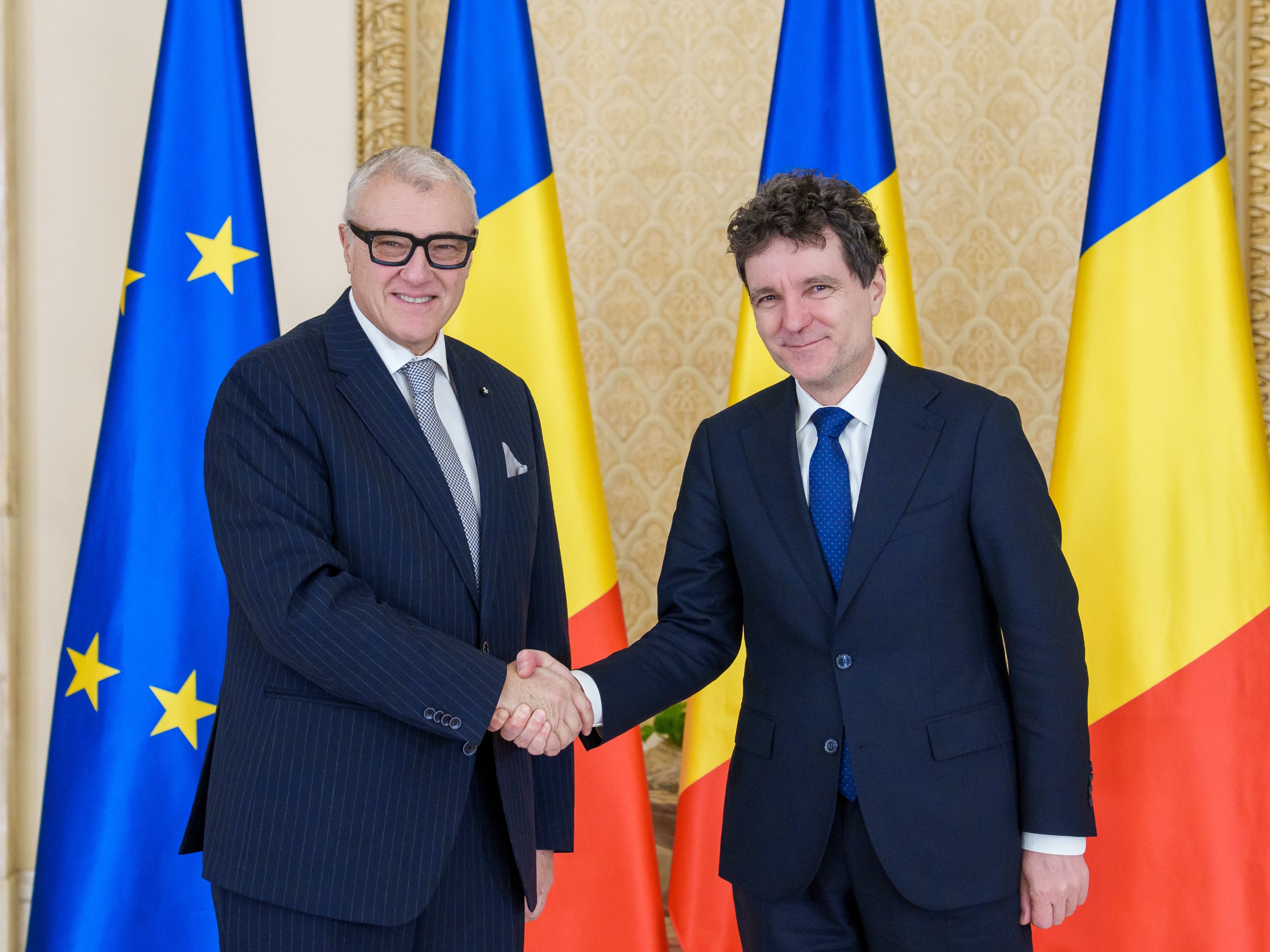
On 15 January 2026, the Ambassador of the Sovereign Order of Malta to Romania, HE Roberto Musneci KM, attended the annual reception hosted by the President of Romania for the diplomatic corps, held at Cotroceni Palace.
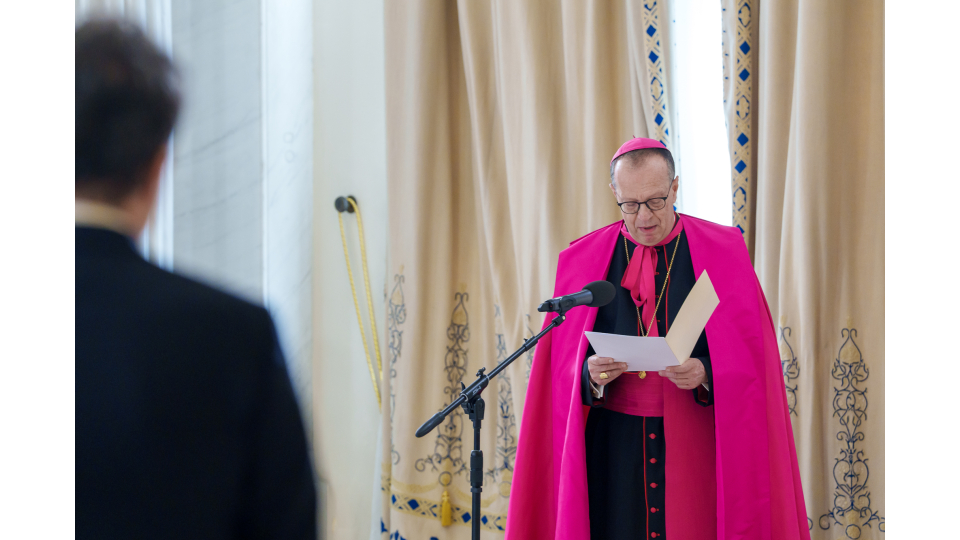
On behalf of the diplomatic corps, the Apostolic Nuncio, HE Archbishop Giampiero Gloder, conveyed to President Nicușor Dan and to the Romanian people best wishes for the New Year. In his wide-ranging address, Archbishop Gloder commended Romania’s efforts over the past year to uphold democracy and national security, as well as its commitment to fostering a process of reconciliation. In this context, reference was made to the widely discussed initiative to declassify the archives of the former communist security services.
The Apostolic Nuncio also offered a thoughtful analysis of the global situation, highlighting the growing polarisation of geopolitics and the need to strengthen multilateralism. Echoing the reflections of His Holiness Pope Leo XIV, he underlined the importance of multilateral cooperation as a means of safeguarding peace and human dignity, prudently reconciling the interests of nations with the fundamental values that sustain coexistence within the international community. Given the breadth and relevance of the address, the full text of the speech is attached to this post.
In his remarks, President Nicușor Dan presented a comprehensive overview of the past year and the challenges facing Romania. He referred to efforts undertaken to embark on a process of national reconciliation following a complex electoral cycle, measures adopted to stabilise the economy, and the ongoing need to strengthen the independence of the judiciary.
Addressing the international context, marked by persistent and overlapping crises, the President reaffirmed Romania’s commitment to its European Union, United States, and NATO partnerships, described as the cornerstone of the country’s foreign policy. Particular emphasis was placed on regional security, especially in the Black Sea area and on the Eastern Flank, in the context of the war in Ukraine. Looking ahead to 2026, President Dan reiterated Romania’s intention to remain an active and reliable member of the European Union, pursuing a policy of “independent solidarity”. This approach combines loyalty to alliances with the protection of national strategic interests, including support for the European integration of the Republic of Moldova, regional and energy security, social cohesion, the fight against corruption, and accession to the OECD. Reference was also made to Romania’s involvement in other regions of the world where conflict de-escalation, reconciliation, and reconstruction are required.
Following the ceremony and the reception that concluded the event, Ambassador Musneci stated, “It is always a pleasure to join the diplomatic corps at Cotroceni Palace for the traditional meeting with the President.” The Ambassador continued, “This year in particular, the depth and breadth of the speeches, both on the Romanian and global contexts, offered much food for thought on how to overcome the current moment of global and local polarisation. Rarely in history have global events had such a direct and immediate impact on local realities and on the everyday lives of citizens.”
Discursul Decanului Corpului Diplomatic
la începutul noului an 2026
Domnule Președinte,
Domnule ministru,
Excelențele Voastre,
Doamnelor şi domnilor,
În această tradițională întâlnire pentru schimbul de urări la începutul Noului An, în numele tuturor Șefilor Misiunilor Diplomatice acreditate în România, am onoarea să prezint Excelenței Voastre și, prin dumneavoastră, Autorităților de Stat și cetățenilor români, mulțumirile noastre pentru ceea ce s-a realizat în anul care s-a încheiat și cele mai bune urări pentru anul pe care l-au început.
Exprimăm recunoștința noastră, în primul rând, pentru tot ceea ce Excelența Voastră și Autoritățile române au făcut pentru a promova și dezvolta relațiile și colaborarea cu țările și instituțiile pe care avem onoarea să le reprezentăm în România, în contextul internațional complex pe care îl trăim.
Vă mulțumim pentru reamintirile și intervențiile oportune care au caracterizat aceste luni din mandatul dumneavoastră, menite să promoveze o transparență tot mai mare în gestionarea afacerilor publice, o dezvoltare mai favorabilă și o securitate sporită în regiune, în căutarea constantă a căilor de pace.
Urările noastre, la începutul anului, se îndreaptă mai ales către toate instituțiile responsabile de conducerea națiunii, ca acestea să își poată îndeplini cu spirit de serviciu, competență și înțelepciune sarcinile lor în beneficiul cetățenilor români, pe calea conviețuirii democratice și integrării europene.
În anul care s-a încheiat, România a experimentat finalizarea unui proces electoral complex în care a demonstrat capacitatea de a menține solide structurile democratice, protejând apărarea și securitatea națională, de asemenea, pentru a salvgarda hotărârea liberă a voinței alegătorilor. Alegerile sunt întotdeauna un moment fundamental în orice sistem democratic și necesită un efort deosebit de transparență și responsabilitate pentru binele tuturor.
Permiteți-mi să menționez și că, anul trecut, am sărbătorit cea de-a douăzeci și cincea aniversare de la deschiderea Arhivelor Securității, o oportunitate de a întări angajamentul, atât al Actorilor politici, cât și al Societății Civile, de a depăși toate diviziunile trecutului, pentru o reconciliere tot mai efectivă în țară la toate nivelurile.
România, domnule Președinte, își continuă drumul său de dezvoltare, care a marcat istoria sa recentă, continuă modernizarea progresivă și constantă a țării, inclusiv cea a digitalizării, în ciuda cadrului economico-financiar global cu trăsături incerte, precum și integrarea acesteia în contextul european. Finalizarea procesului de aderare la spațiul Schengen a fost un semn clar al acestui lucru și sperăm ca dezvoltarea țării să continue prin politici bazate pe stabilitate, pentru a permite creșterea bunăstării națiunii.
I cannot omit to refer to the international situation which, over the past year, has undergone one of the most profound transformations since the end of the Second World War. Alliances and balances that long constituted stable and reliable reference points in international relations have given way to new and unprecedented foreign policy approaches, the contours of which have yet to be fully defined.
At the conclusion of the pandemic, there appeared to be a shared determination to strengthen relations among our Countries, both at the level of international engagement and within our respective societies, in order to promote respect, solidarity, and cooperation. The present situation, however, seems to reflect different trajectories, the full implications of which have yet to be carefully assessed.
Despite global poverty decreasing, inequality is on the rise, impacting human dignity. Migration has gradually assumed worldwide dimensions, with consequences that are far-reaching. International initiatives for environmental protection cannot be disregarded; indeed, they must be carefully evaluated and sustainably implemented. In a climate of hostility, conflicts persist: while a few find resolution, others endure, and new ones emerge.
In several Countries, internal divisions are deepening, with societies polarized by forms of confrontation that lack calm and respectful dialogue. As a result, we witness social instability, driven more by polemics rather than by the pursuit of a broad and collaborative partaking. Beneath these dynamics, a more profound and structural fragility is becoming ever more manifest.
A further element gives cause for concern, as Pope Leo recently pointed out in his address to the Diplomatic Corps, when he observed: „The weakness of multilateralism is a particular cause for concern at the international level. A diplomacy that promotes dialogue and seeks consensus among all parties is being replaced by a diplomacy based on force, by either individuals or groups of allies. War is back in vogue and a zeal for war is spreading. Peace is no longer sought as a gift and a desirable good in itself […] Instead, peace is sought through weapons as a condition for asserting one’s own dominion.” (Address to Members of the Diplomatic Corps accredited to the Holy See, 9 January 2026).
In this context, there nonetheless exist relationships, projects and paths of solidarity that aim to offer a ray of hope for the future. Contributing to such efforts is precisely one of the essential tasks of the Diplomatic Corps: to help build an international community in which challenges are addressed through the pursuit of a shared vision, by seeking the path of dialogue and measured confrontation, and by prudently conjugating the interests of Nations with the fundamental values that sustain coexistence within the international community. We cannot renounce our confidence that international law, together with established international practice, remains a valuable and effective means of ensuring respectful and positive relations among States.
Domnule Președinte, în calitate de Decan al Corpului Diplomatic, în numele tuturor colegilor mei, am onoarea să îi urez cu sinceritate Excelenței Voastre ca anul care tocmai a început să conducă la o continuare plină de curaj în înfruntarea provocărilor cu care se confruntă România, pentru a promova o gestionare tot mai atentă și transparentă a afacerilor publice, pentru a întări stabilitatea instituțiilor democratice ale țării, pentru a da întotdeauna viață unui dialog politic senin și constructiv și a consolida dezvoltarea ulterioară a politicilor sociale și economice care să fie orientate spre binele tuturor cetățenilor acestei națiuni.
Țările și instituțiile pe care noi le reprezentăm doresc să Vă asigure, domnule Președinte, de deplina lor disponibilitate în a continua relațiile valoroase și colaborarea eficientă și, în timp ce vă exprimăm sincera recunoștință pentru această întâlnire cordială și solemnă, Vă rugăm să binevoiți a transmite, din tot sufletul, întregului drag popor al României cele mai sincere urări pentru un viitor de armonie, bunăstare și pace.